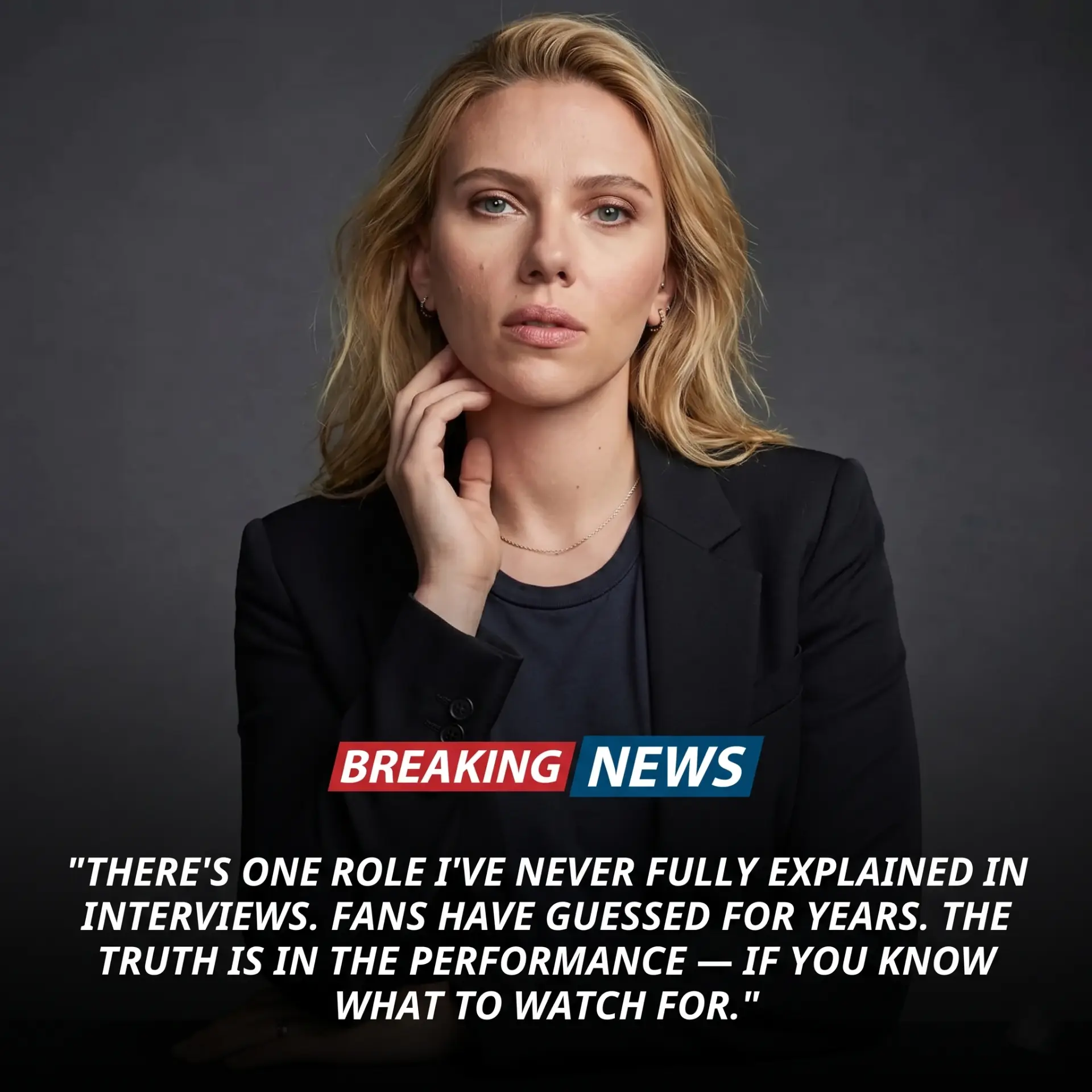
🚨🔥 BLACK WIDOW’S FINAL SECRET: The Tiny Detail in Scarlett Johansson’s Most Heartbreaking Avengers Scene That Changes Everything
Scarlett Johansson • Natasha Romanoff • Avengers: Endgame
THE SCENE MILLIONS WATCHED, BUT NOT EVERYONE UNDERSTOOD
The red landscape of Vormir is almost painfully quiet. There is no roaring battlefield, no army charging toward the heroes, no triumphant Avengers theme overwhelming the moment. Natasha Romanoff and Clint Barton stand before a choice that neither wants to accept. The Soul Stone requires a life, and each friend is determined to protect the other. What follows is one of the Marvel Cinematic Universe’s most devastating sequences, yet its emotional meaning may be much bigger than the immediate shock of Black Widow’s death.
For years, fans knew Natasha as the calm professional who could read a room, survive an ambush, and deliver a perfectly timed joke while everyone else panicked. In Avengers: Endgame, that familiar composure conceals something more intimate. She is fighting not for glory or recognition, but for the people who have become her home. Her final decision changes the way every earlier Black Widow scene can be understood.
 Scarlett Johansson at the Captain America: The Winter Soldier Paris premiere, 2014. Archival photograph, not an image of a newly disclosed scene. Image source and license.
ONE QUIET DETAIL CHANGES THE MEANING
The crucial detail is not a hidden prop or an undiscovered line of dialogue. It is agency. On Vormir, Natasha and Clint do not simply stumble into a trap and surrender to its rules. They understand the terrible cost, struggle to prevent each other from paying it, and reveal how deeply they value the other person’s life. Natasha refuses to let Clint carry that burden.
That distinction matters because so much of Natasha’s earlier life was defined by people making choices for her. Trained in the Red Room and shaped into an operative, she spent years trying to escape the moral consequences of her past. On Vormir, she makes a choice no handler, institution, or enemy dictates. The action is heartbreaking precisely because the decision is hers. It is also the clearest expression of how profoundly she has changed.
 Scarlett Johansson at the Captain America: The Winter Soldier press conference, 2014. Archival photograph, not an image of a newly disclosed scene. Image source and license.
THE FAMILY SHE FOUND AFTER YEARS OF RUNNING
In earlier Avengers films, Natasha seemed to operate between allegiances: intelligence agencies, superhero teams, temporary alliances, and dangerous undercover assignments. But the Blip transforms her role. While other surviving heroes retreat into their pain, she continues coordinating the scattered Avengers, trying to hold together a fragile network of people who have lost nearly everything.
Look again at those scenes of Natasha working in the Avengers compound. The exhaustion in her expression feels different when we know where her story leads. She is not simply keeping an organization alive. She is protecting a family, one of the first that she was free to choose. This makes the Vormir sequence more than an exchange demanded by a magical artifact. To Natasha, saving the people she loves is inseparable from saving the world.
 Scarlett Johansson photographed during Avengers: Endgame promotional coverage, 2019. Archival photograph, not an image of a newly disclosed scene. Image source and license.
WHAT SCARLETT JOHANSSON ACTUALLY EXPLAINED
Johansson has spoken publicly about the intention behind this ending. In interviews about Black Widow, she described Natasha’s sacrifice as an active decision and a fitting conclusion to the character’s long journey. She also discussed how knowing the ending influenced the earlier-set solo film: the creative team wanted viewers to understand the emotional work Natasha had done to confront her past and move forward.
Those comments are especially revealing because they reject the idea that the heroine’s final act should be understood only as punishment for earlier mistakes. The character is not asking someone else to declare her worthy. She recognizes the people she loves, understands what they need, and acts. Johansson’s interpretation gives the ending a painful dignity even for viewers who wish Natasha had survived.
 Scarlett Johansson and Paul Rudd during Avengers: Endgame promotional coverage. Archival photograph, not an image of a newly disclosed scene. Image source and license.
WHY CLINT BARTON IS ESSENTIAL TO THE MOMENT
The scene would not have the same force without Clint Barton. Their friendship reaches back to the period before the Avengers became a household name. Clint is one of the people who saw something human in Natasha when her life was still dominated by secrets and violence. Over time, they become more than colleagues who trust each other during dangerous missions. They become evidence that lasting loyalty can exist despite their histories.
On Vormir, Clint is burdened by what he has become since losing his family. Natasha sees both that pain and the possibility of his return to the people he loves. Their confrontation is not a contest over who matters less. It is a desperate argument between two people who each believe the other deserves to live. And that is why the small emotional details, their urgency, their refusal to release one another, and the final silence, remain so affecting.
 Scarlett Johansson at a Captain America press conference, 2014. Archival photograph, not an image of a newly disclosed scene. Image source and license.
THE ENDING THAT REFRAMES THE BEGINNING
After watching Vormir, even Natasha’s lighter appearances carry new weight. Her humor becomes a defense she learned to use; her trust in the team becomes an achievement rather than a given; her willingness to help a friend becomes the thread holding together a life of difficult choices. Black Widow was never just the Avenger without superhuman powers. She was a person continually redefining what courage, loyalty, and freedom meant.
There is no need to invent a newly discovered secret interview to appreciate that transformation. The clues are already in the films, and Johansson’s own explanations support a richer reading. The woman who once lived under other people’s control reaches her final chapter able to decide who she wants to be. That does not make the loss less painful. It makes the sacrifice more personal, more complicated, and perhaps more unforgettable.
The next time Avengers: Endgame reaches its quietest, saddest moment, watch Natasha’s resolve rather than searching for a hidden message. The detail that changes everything may have been visible the whole time: she did not choose death because she had nothing left. She chose to save a family because, at last, she had something worth everything.
Context sources: SYFY interview · Total Film interview coverage · Nerdist set visit.

 Archival illustrative image; not documentation of the scene described.
 Archival illustrative image; not documentation of the scene described.
 Archival illustrative image; not documentation of the scene described.
 Archival illustrative image; not documentation of the scene described.
 Archival illustrative image; not documentation of the scene described.