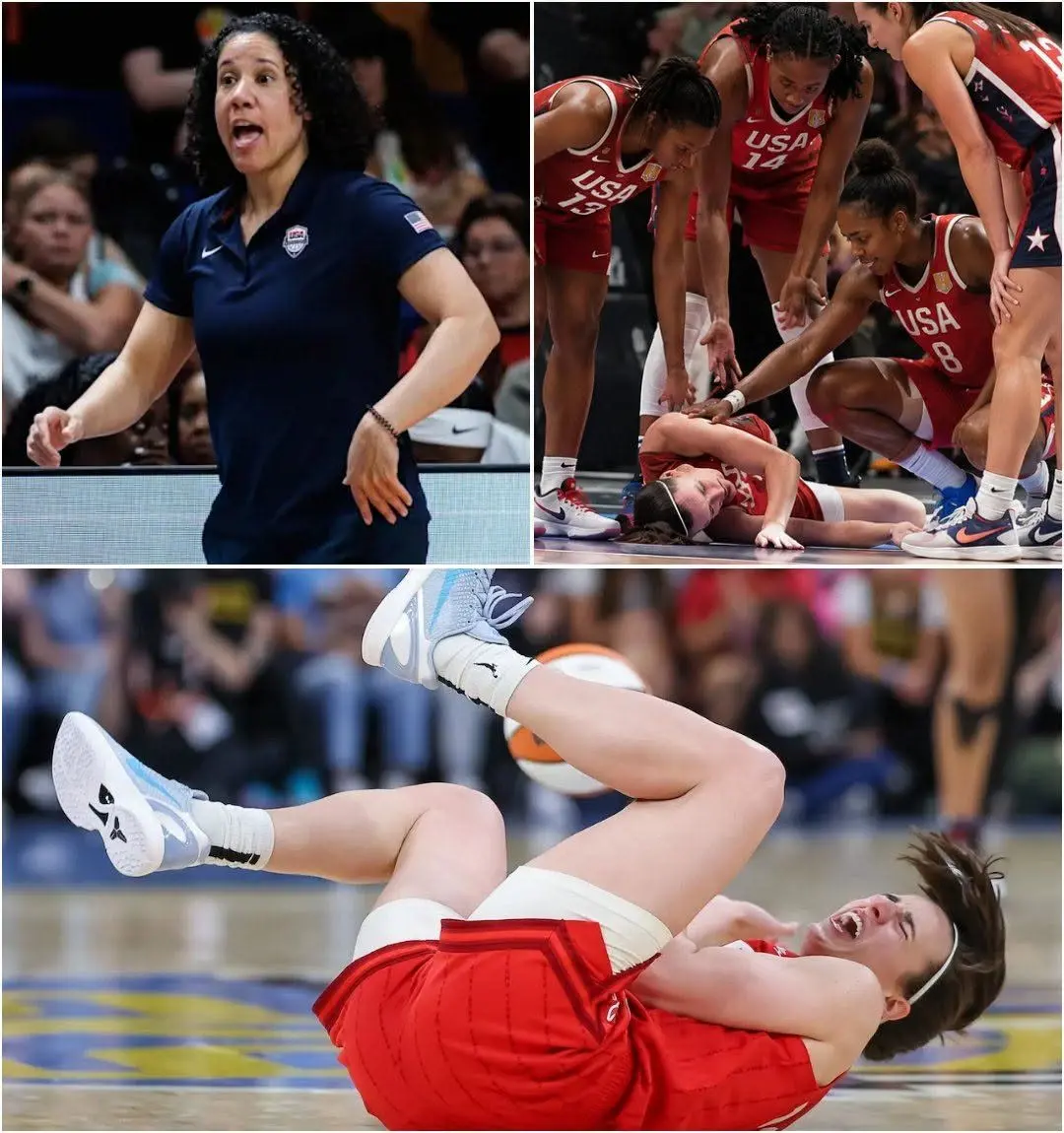
🚨🏀 TEAM USA INJURY SCARE: CAITLIN CLARK’S LATE ANKLE MOMENT SPARKS CONCERN AFTER 76–66 WIN OVER SPAIN — BUT THE BIGGEST QUESTION IS WHAT HAPPENS NEXT 👀🇺🇸
Few things can silence a basketball crowd faster than seeing a star player suddenly reach for an ankle.
That is why any suggestion of an injury involving Caitlin Clark immediately becomes a major story.
Team USA did defeat Spain 76–66 in the semifinal of the 2026 FIBA Women’s World Cup, punching its ticket to the championship game against France. Clark was part of that victory, and the United States survived a difficult contest that was tied entering the fourth quarter before pulling away late.
But there is an important distinction surrounding the injury claim in the supplied account.
At the time of writing, the major reports available on the USA-Spain semifinal confirm the 76–66 result and Team USA’s advancement to the final, but they do not independently establish that Clark suffered a non-contact ankle injury or that Kara Lawson issued a specific postgame medical update matching the description above. The claim should therefore be treated cautiously unless an official USA Basketball, FIBA, team or direct postgame source confirms it.
That does not make the concern surrounding Clark difficult to understand.
She has become one of the most closely watched players in the sport, and every physical setback carries consequences beyond a single international game.
Clark is not only representing Team USA in Berlin.
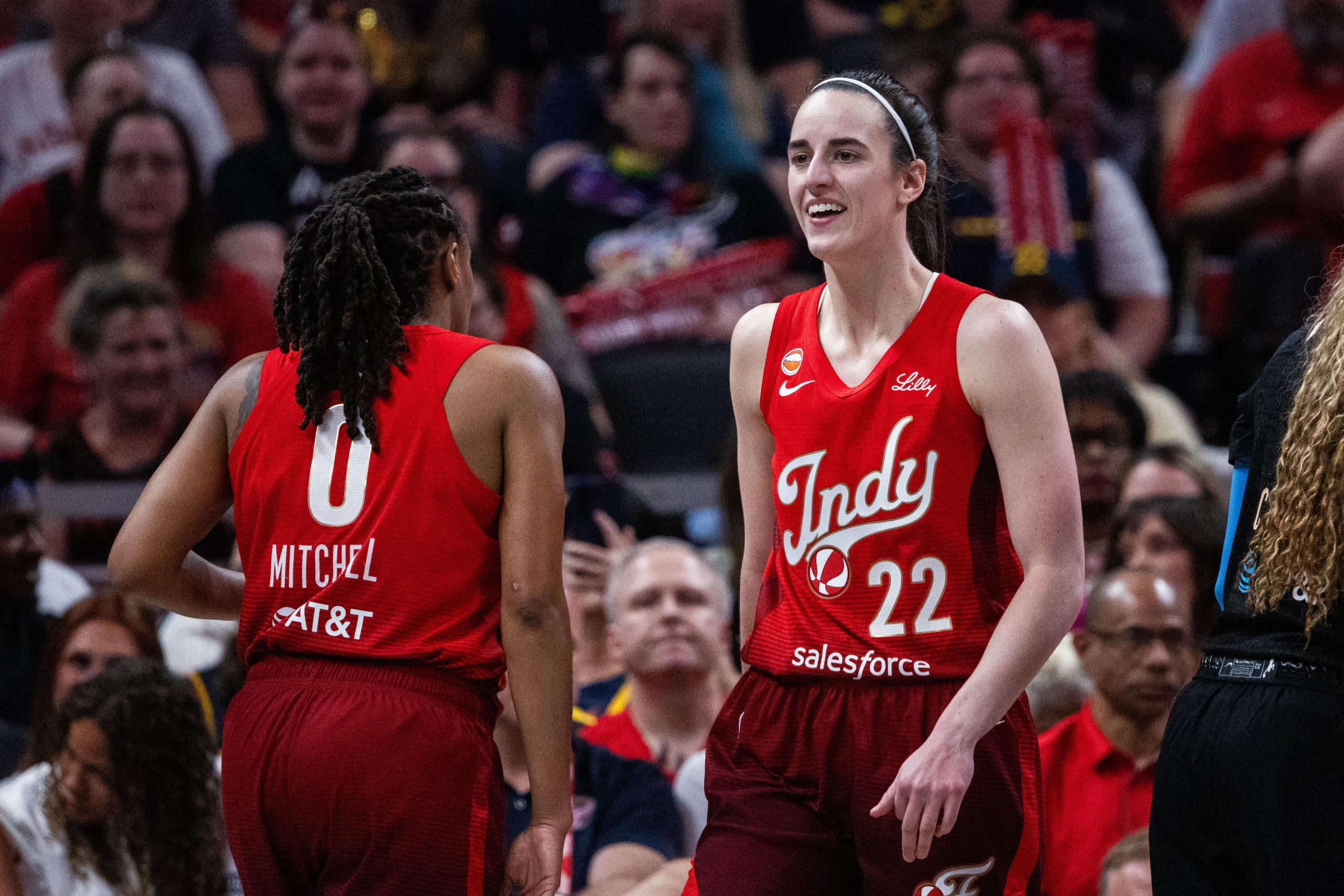
She is also one of the central figures in the Indiana Fever’s season.
Any potential injury would immediately raise two questions.
Could she play in the World Cup final?
And what would it mean for Indiana?
That is why ankle injuries create so much anxiety.
Basketball places enormous stress on the lower body.
Players accelerate.
Stop suddenly.
Change direction.
Land in traffic.
Cut at sharp angles.
And repeat those movements dozens of times over the course of a game.
A non-contact ankle problem can look especially alarming because there may be no obvious collision explaining what happened.
The player simply plants, turns or lands — and suddenly something feels wrong.
But appearance alone does not tell anyone the severity.
Some ankle injuries produce frightening moments and relatively short absences.
Others initially look minor and later require more careful treatment.
Without imaging, medical evaluation and a confirmed diagnosis, guessing at timelines would be irresponsible.
That matters particularly with Clark because Team USA is at the most important point of the tournament.
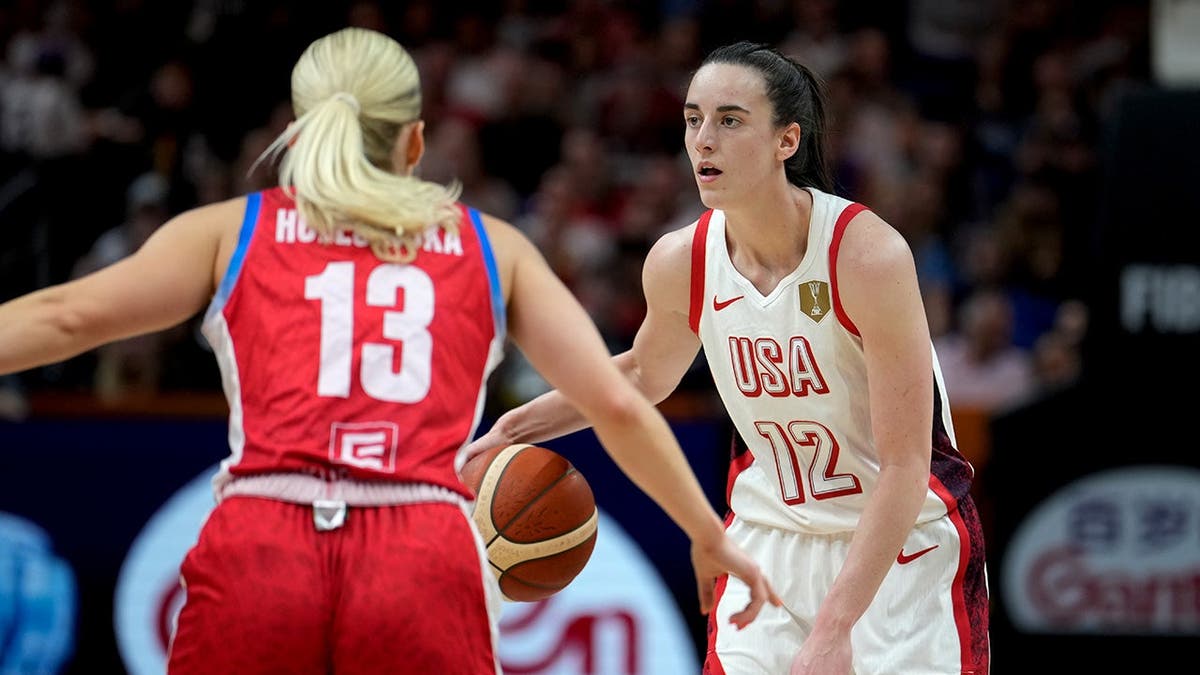
The Americans have reached the championship game against France, a rematch of the 2024 Olympic final. The semifinal against Spain required a strong fourth quarter after the teams were tied at 58 entering the final period, with Team USA relying on defense and veteran execution to finish the job.
Clark’s contribution to the tournament has also gone well beyond scoring.
FIBA statistics entering the semifinal showed her averaging seven assists per game through the quarterfinal round, demonstrating how important her passing has been to the American offense.
That number helps explain why even a temporary limitation would matter.
Clark changes pace.
She can turn a rebound into a scoring opportunity with one outlet pass.
She stretches defenses beyond the three-point line.
She can punish aggressive pressure by finding teammates behind it.
And when she gets comfortable, she forces opponents to defend larger areas of the floor than they normally would.
Those qualities become even more valuable in a championship game.
France is not simply another opponent.
It is a team capable of defending physically, creating pressure and punishing mistakes.
Team USA will need flexibility.
If Clark is available, Kara Lawson has another elite ball-handler and creator to deploy.
If she is limited, the rotation becomes more complicated.
The larger question is how Lawson would approach the situation if there were even minor concern.
Championship pressure naturally encourages athletes to play through discomfort.
Nobody wants to miss a final.
Opportunities like this are rare.
But the responsibility of coaches and medical staffs extends beyond one game.
Clark’s long-term health matters to USA Basketball.
It matters to the Fever.
And, most importantly, it matters to Clark herself.
Playing an injured athlete simply because the game is important can create greater problems later.
That is why the wording of any official update would be significant.
Terms such as “day-to-day,” “questionable,” “precautionary” or “available” may sound similar to casual fans, but they can represent very different medical and competitive realities.
Until such language comes directly from an authoritative source, speculation should remain speculation.
There is another reason this story has moved so quickly.
Clark exists in a sports environment where almost every moment involving her becomes amplified.
A grimace becomes a clip.
A conversation with a trainer becomes a debate.
A brief trip to the bench becomes a social-media theory.
That level of attention is a consequence of enormous popularity, but it also creates misinformation risk.
Fans naturally want answers immediately.
Sports medicine rarely works that way.
Even teams sometimes need hours — or longer — before they know exactly what they are dealing with.
The safest conclusion is often the least dramatic one:
wait for the examination.
For Team USA, the situation also highlights why roster depth matters.
This American team was built with multiple high-level guards and creators.
Chelsea Gray brings control and experience.
Jackie Young can handle and score.
Other perimeter players can absorb additional minutes.
The United States is not dependent on one player to function.
That depth is one of the reasons the Americans remain so difficult to beat.
But “replaceable” is not the same as “identical.”
Nobody else creates offense exactly the way Clark does.
Her range forces unique defensive choices.
Her transition passing can turn neutral possessions into immediate opportunities.
Her willingness to attempt ambitious passes adds unpredictability.
A championship opponent notices those differences.
Indiana fans will be watching just as closely.
The Fever’s season has placed major responsibility on Clark’s ability to organize the offense, create shots and handle enormous defensive attention.
Any injury concern during international competition naturally carries over into the WNBA conversation.
Would she need rest?
Could she miss practices?
Would Indiana reduce her minutes?
Again, those questions cannot be answered responsibly without an actual diagnosis.
The temptation is to jump immediately from “ankle concern” to worst-case scenario.
That is not how injuries should be covered.
The correct sequence is simpler.
First, confirm whether an injury actually occurred.
Then establish the diagnosis.
Then evaluate availability.
Then discuss recovery.
Anything beyond that becomes guesswork.
For now, the verified story from Berlin is already dramatic enough.
Team USA defeated Spain 76–66 in a semifinal that demanded patience, defense and late-game execution. Breanna Stewart led the Americans with 16 points, while the United States held Spain to only eight points in the fourth quarter to reach another World Cup final.
The next challenge is France.
The championship is waiting.
And Clark remains one of the most important storylines surrounding the American team.
If an official medical update confirms an ankle issue, every detail will matter.
How severe?
How much swelling?
Can she practice?
Can she cut normally?
Can she play without risking something worse?
Those are the questions that should determine what happens next — not pressure from social media and not the magnitude of the final.
Clark has already helped Team USA reach the championship stage.
The priority now should be making sure that whatever happens next is based on medical reality.
Because one game, even a World Cup final, should never matter more than the health of the player expected to play it.
And until Team USA provides confirmed information, that is the most important update of all:
Do not confuse concern with diagnosis.
Do not confuse a viral claim with an official injury report.
And do not assume Caitlin Clark’s championship availability until the people actually evaluating her say exactly where things stand. 🇺🇸🏀
TEAM USA INJURY SCARE: Superstar guard Caitlin Clark was helped off after suffering a non-contact ankle injury in USA’s 76–66 FIBA World Cup championship win over Spain, and head coach Kara Lawson has now delivered an important injury update on the Fever star...
𝗥𝗲𝗮𝗱 𝗧𝗵𝗲 𝗙𝘂𝗹𝗹 𝗦𝘁𝗼𝗿𝘆 𝗜𝗻 𝗧𝗵𝗲 𝗖𝗼𝗺𝗺𝗲𝗻𝘁𝘀. 👇👇👇